



HSS vs. Carbide vs. Coated Tools

Geeta Tools
Posted On 02 Sept, 2025
How to Choose the Right Cutting Tool Material: HSS vs. Carbide vs. Coated Tools
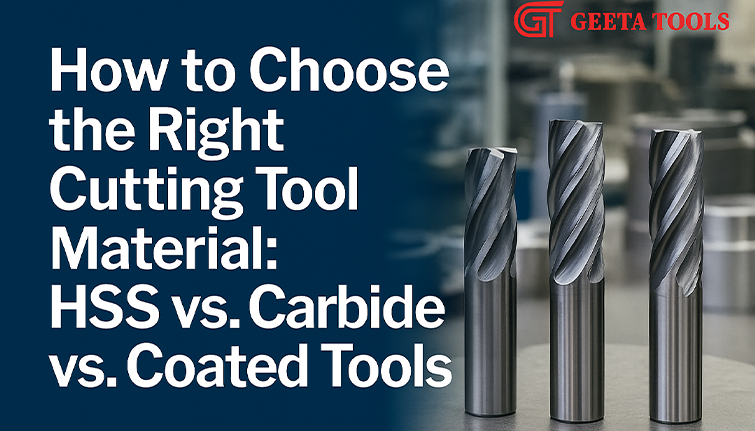
Choosing the right cutting tool material isn’t just about cost—it’s about precision, speed, and long-term productivity.
HSS, Carbide, or Coated tools : Which one should you pick?
Here’s a quick guide to help you decide.
Selecting the right cutting tool material is one of the most critical decisions in machining. The material directly affects tool life, machining speed, surface finish, and overall productivity. Among the most widely used tool materials are High-Speed Steel (HSS), Carbide, and Coated Tools. Each has unique advantages depending on the application.
1. High-Speed Steel (HSS)
Best for: General-purpose machining, lower cutting speeds, and tough or interrupted cuts.
Advantages:
Limitations:
Use Case: Drilling, tapping, or milling low to medium hardness materials where tool toughness is critical.
2. Carbide Tools
Best for: High-speed machining and production environments.
Advantages:
Limitations:
Use Case: Turning, milling, or boring hard materials at high speed for mass production.
3. Coated Tools (TiN, TiAlN, DLC, etc.)
Best for: High-performance machining with improved tool life.
Advantages:
Limitations:
Use Case: High-volume precision machining where consistency and productivity matter.
Choosing the Right Tool Material: Key Considerations
• Material Being Machined – Tough alloys may require carbide or coated tools.
• Production Volume – HSS works for small runs; carbide and coated tools shine in mass production.
• Cost vs. Performance – Balance upfront cost with long-term tool life.
• Surface Finish & Precision – Coated tools often deliver superior results.
There’s no one-size-fits-all answer. HSS remains the go-to for versatility and toughness, carbide shines in speed and precision, and coatings push performance even further. The right choice depends on your need of application, production volume, and performance requirements.
At Geeta Tools – India, we help manufacturers optimize tool selection for maximum efficiency and cost-effectiveness.
📞 Contact us or visit – www.geetatools.com to learn more.
#CuttingTools #Manufacturing #Machining #CNC #ToolingSolutions